
Choosing an online ticketing service may seem simple at first glance. On the surface, it's just about selling tickets. However, this choice directly influences the profitability of the event, the smooth running of the organization, the participant experience, and the overall administrative burden.
An ill-suited platform can generate unexpected costs, slow down the launch process, complicate registration management, or create friction on the big day. Conversely, a solution that is consistent with your reality becomes a real lever for efficiency.
Ticketing is not just a technical tool. It is the central infrastructure of your event.
Clarify the context before comparing
Before even opening a platform comparison, it is essential to define your own framework.
- Are you organizing a one-time event or a regular series?
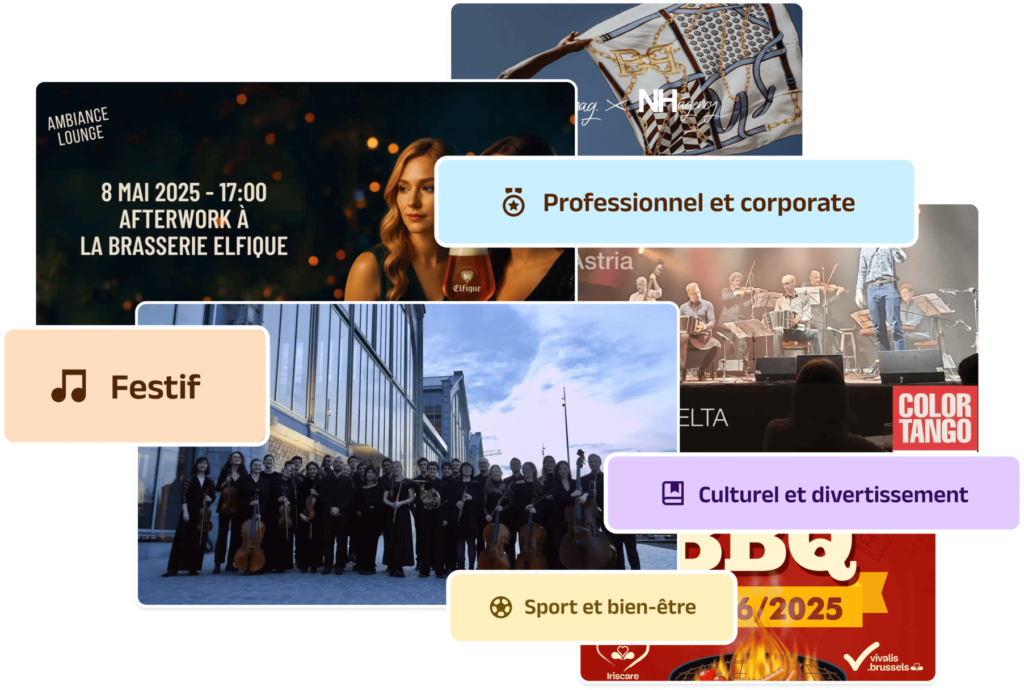
- Is it a professional conference, a festival, etc.?
- Is your audience the general public, students, or corporate?
- Do you require a specific seating plan or simply limited capacity?
These elements determine the suitability of a solution.
An SME that organizes two seminars a year does not have the same needs as a cultural center with an annual program. A local non-profit organization does not seek the same sophistication as a large event operator.
Comparing without context often leads to choosing a tool that is either too complex or, conversely, insufficient.
The simplicity of going online: a strategic factor
The time required to create and publish an event is often underestimated.
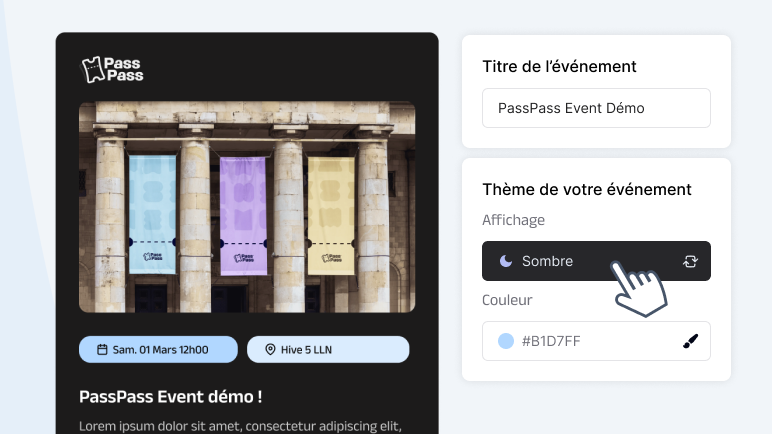
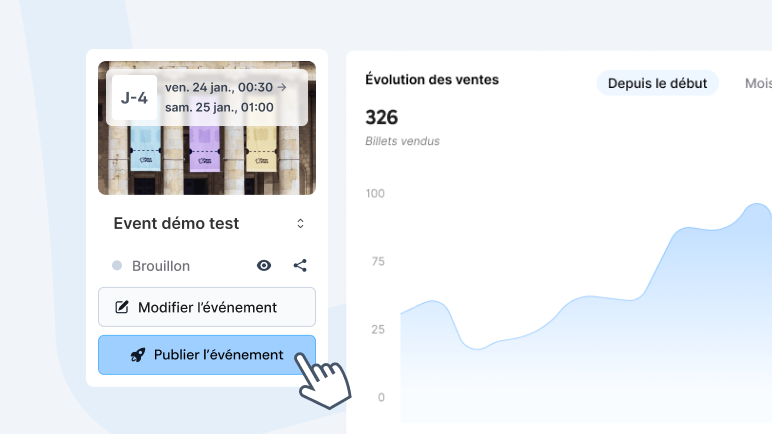
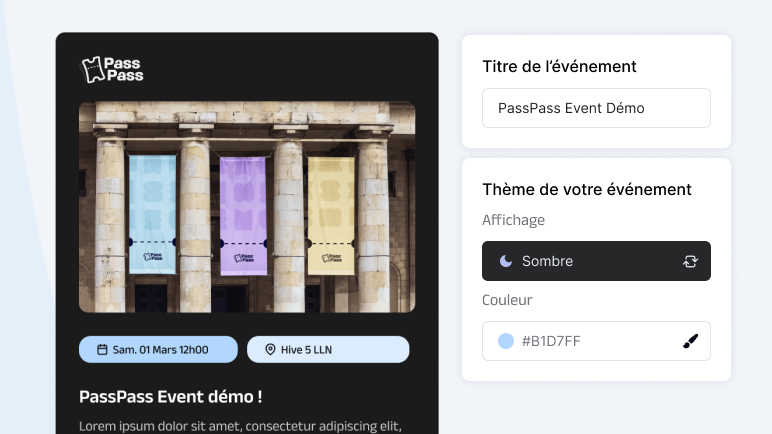
Some platforms require detailed, sometimes technical configuration. Others favor a guided, intuitive approach, allowing you to go live in just a few minutes.
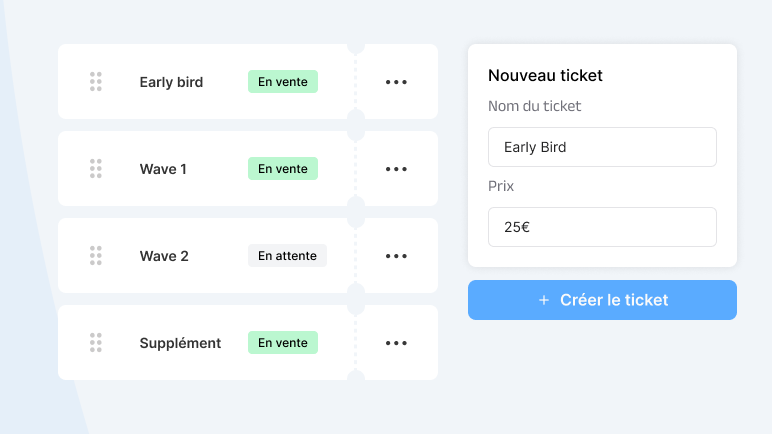
If you organize several events per year, this difference becomes structural. A clear interface allows you to configure rates, adjust quotas, publish a unique link, and modify information without friction.
The lighter the platform, the less you depend on support. And the less you depend on support, the more agile your organization remains.
Understanding the actual cost, not just the percentage
The economic model of a ticket office must be analyzed in depth.
The percentage displayed is never the only indicator. It is necessary to understand the complete structure:
- commission
- any fixed costs
- monthly subscription
- paid modules
- reimbursement costs
- payment fees
- …
The real question is not "2% or 3%?", but rather: what is the total cost for 500 tickets at €35?
Some platforms may seem inexpensive at first glance, but become more expensive once all the fees are added up. A clear and transparent structure makes it easier to forecast your budget and set your ticket prices.
In Belgium, models without subscriptions, with simple and transparent commissions, are often preferred by freelancers, SMEs, and associations.
Payments and cash flow
An efficient ticketing system must secure payments and ensure clear visibility of financial flows.
Payment deadlines have a direct impact on your cash flow. If you have to pay for a venue or service providers before the event, late payment can create unnecessary financial strain.
The platform must clearly indicate the frequency of payments, any security deductions, and the traceability of transactions.
Financial reliability is as important as the interface.
Participant management: the heart of the system
Selling a ticket is only the first step. Participant management is the real operational hub.
Can you easily modify a registration? Add a ticket manually? Export structured data for your accountant? Collect specific information during registration?
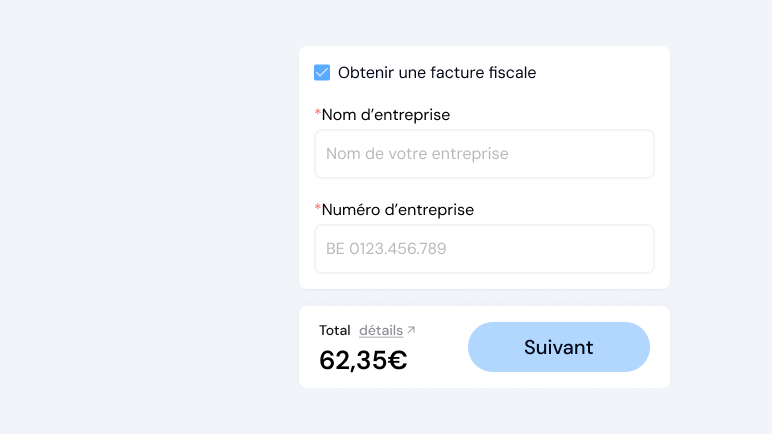
For professional events, customizing the form can be strategic. Requesting the company name, job title, or logistical information at the time of registration avoids the need for further communication later on.
Centralized and clear management reduces administrative errors and frees up time.
D-Day: the reality on the ground
It is often on the day of the event that the true quality of a platform is revealed.
Seamless access control via QR code and mobile app enables quick scanning, real-time validation, and immediate visibility of the number of entries.
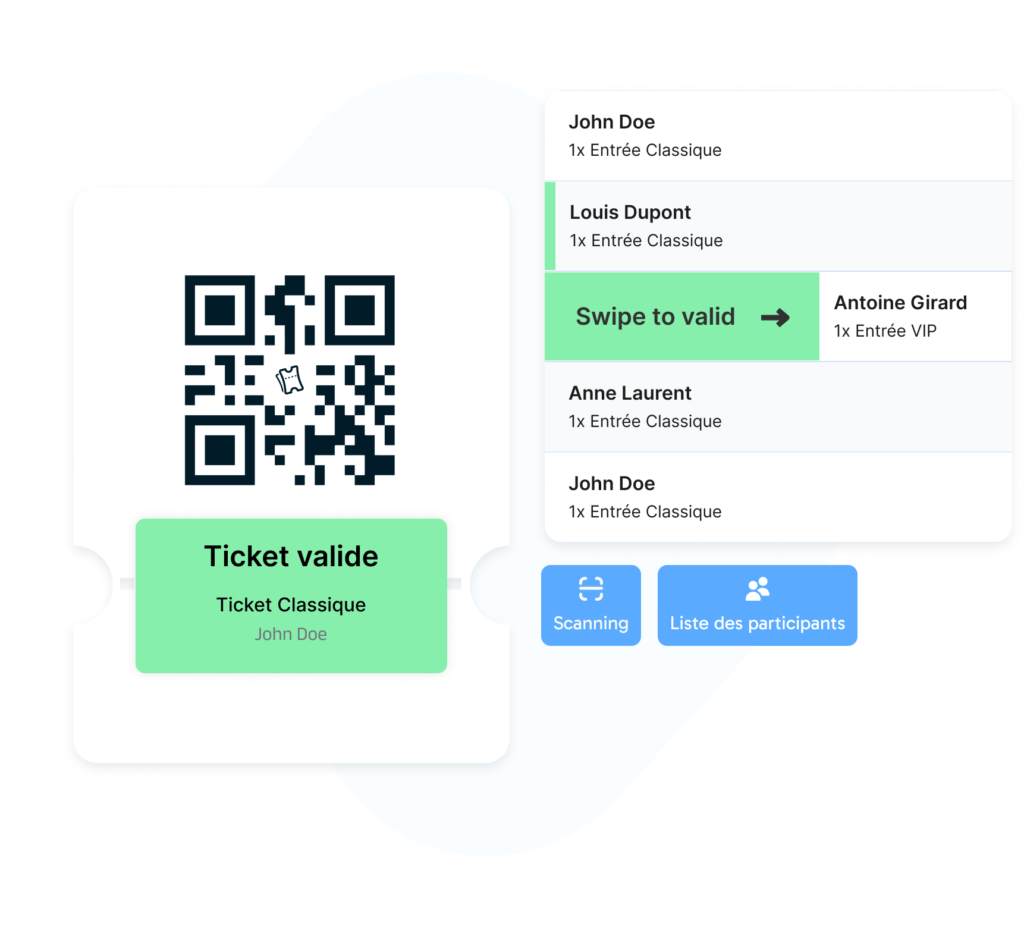
When several hundred people arrive simultaneously, the robustness of the system becomes essential.
A seamless welcome experience immediately enhances the professional perception of your organization.
Administrative obligations
The legal and accounting aspects are rarely the most visible, but they are crucial.
Proper VAT management, structured financial exports, compliance with local standards... These elements become essential when closing the event.
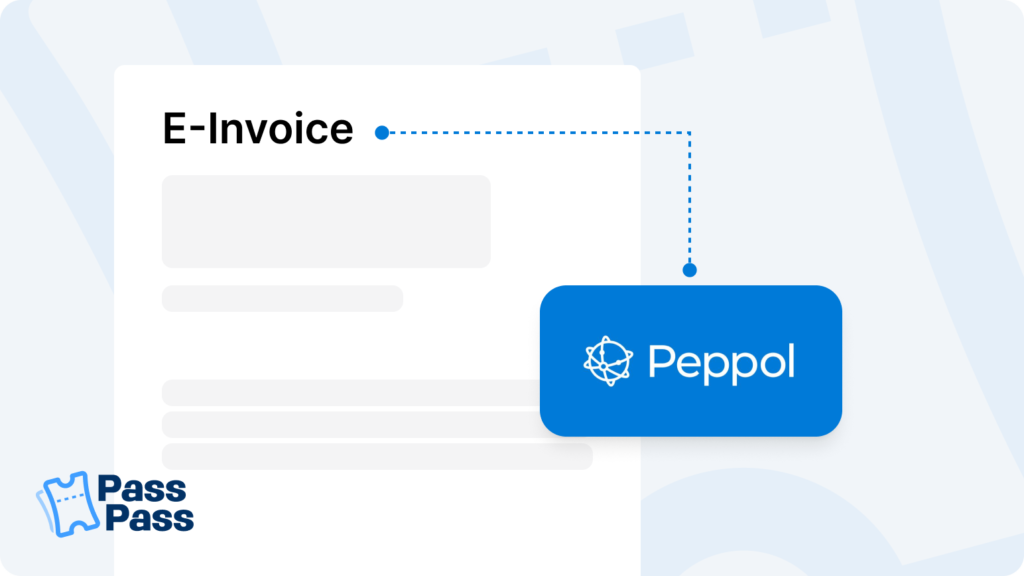
For an SME or association in Belgium, choosing a platform tailored to the national context greatly simplifies accounting work.
Support and guidance
Even the most intuitive solution does not completely eliminate the unexpected.
A late-night sales spike, an urgent change, or a technical question may arise. The quality of customer support then becomes a key factor.
Responsive, local support available in your language can save valuable time and reduce organizational stress.
Ticketing as a marketing tool
Today, ticketing is part of a broader strategy.
Performance tracking, tracking integration, connection with your website or advertising campaigns... A flexible platform allows you to analyze sales performance and optimize your communication.
Ticketing is no longer just transactional. It is becoming a tool for growth.
Adapt the solution to your reality
There is no such thing as a "best universal ticketing system."
The right solution is the one that fits your actual situation. For many independent Belgian organizers, non-profit organizations, SMEs, etc.,the priority remains simplicity, transparency of costs, and no binding subscription.
A solution such as PassPass fits perfectly into this approach: quick online publication, clear pricing structure, smooth participant management, and compliance tailored to the Belgian market.
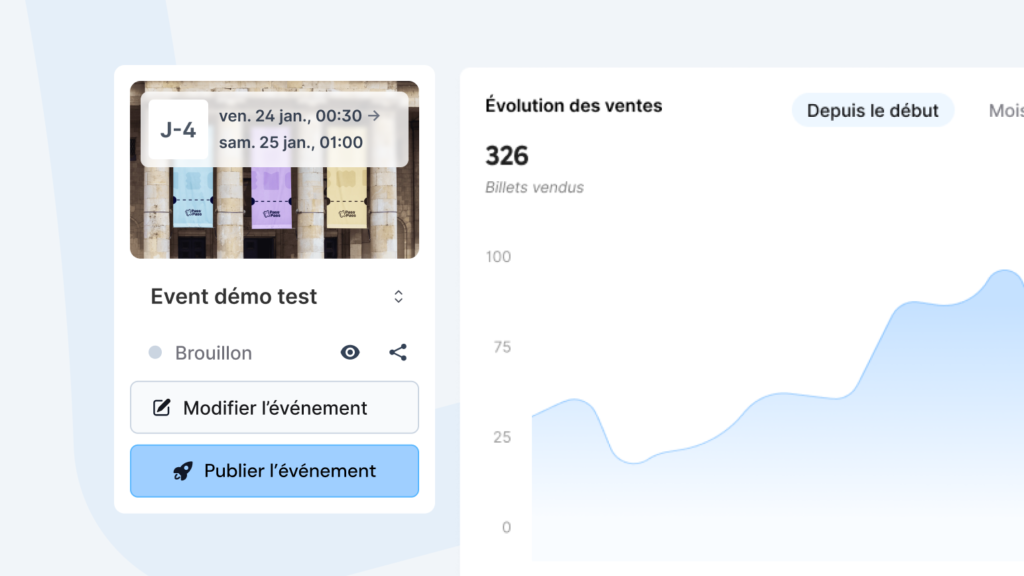
The goal is not to add layers of complexity, but to remove friction.
In conclusion
Choosing an online ticketing system involves evaluating a consistent set of criteria: ease of use, actual pricing structure, payment management, administrative compliance, quality of support, and smooth operation on the day of the event.
A well-considered decision transforms ticketing into a strategic lever rather than an operational constraint.
The more the tool is aligned with your reality, the simpler the organization becomes. And the simpler the organization, the more you can focus on what matters most: the quality of your event.