
Selling tickets online has become second nature for most event organizers.
- Professional conferences
- student parties
- corporate training
- community or cultural events
Digital ticketing simplifies management and automates much of the process. However, when it comes to choosing a platform, many discover that the promised simplicity is not always there.
Not all solutions are designed with the same philosophy. Some favor advanced settings and complex structures. Others emphasize autonomy and speed of implementation.
If the goal is to sell tickets easily, several factors beyond the appearance of the interface must be analyzed.
Truly fast online publishing
The ease begins as soon as the event is created.
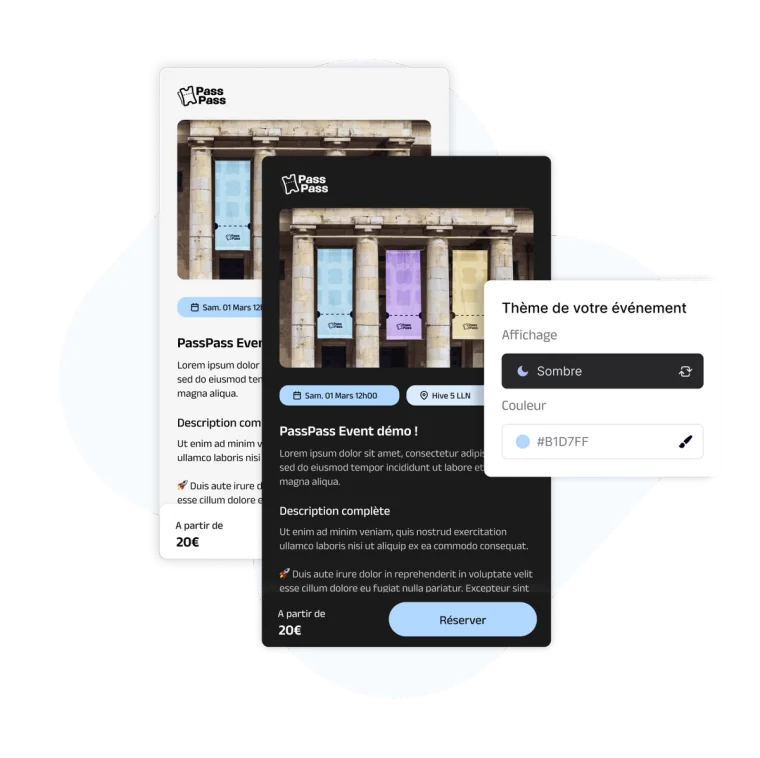
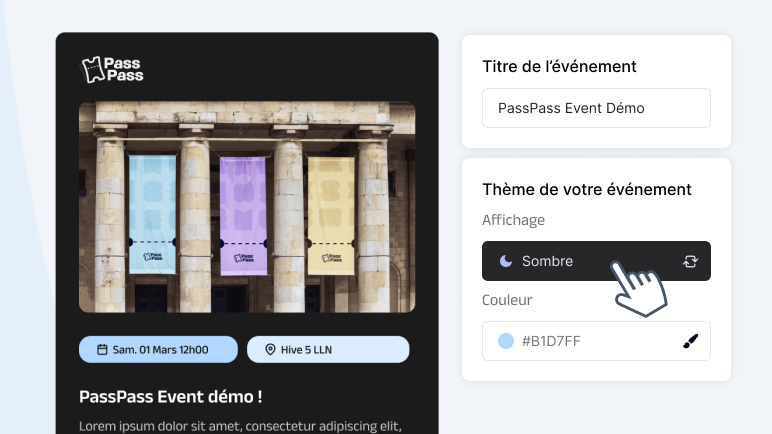
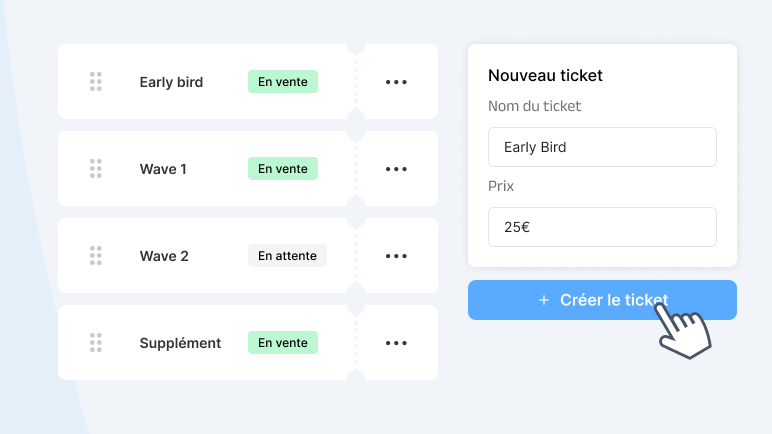
An effective platform should allow you to go from idea to sale in a matter of minutes. Adding a title, setting a date, choosing a location, inserting a description, and creating different ticket categories should not require any special technical skills.

The more intuitive the tool, the more autonomy the organizer gains.
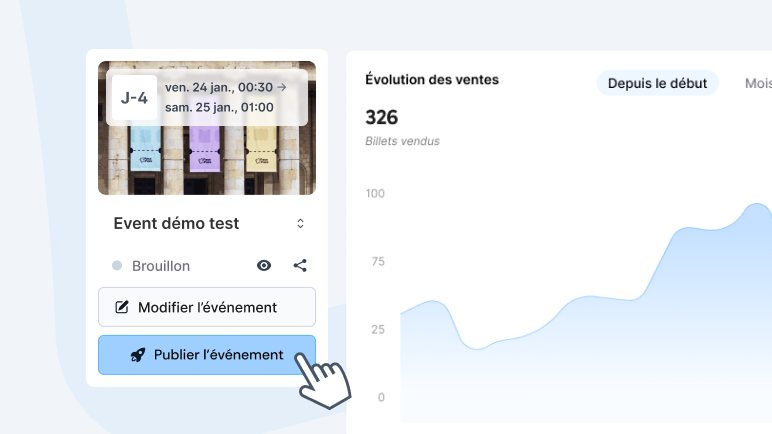
The ability to adjust a rate, change a capacity, or correct information after publication greatly contributes to overall fluidity.
When going online becomes a natural process rather than a complex technical step, sales start faster and energy can be devoted to promotion.
A clear and predictable pricing structure
The simplicity of a platform is not only about the interface, but also its business model. Many solutions advertise attractive percentages without always detailing additional fees. To sell tickets with peace of mind, it is essential to understand the actual cost per ticket.
Some platforms combine a percentage with a fixed fee. Others charge a monthly subscription or additional paid modules.
What really matters is not the isolated commission figure, but the total amount charged in a specific scenario. Being able to accurately anticipate this cost allows you to set your prices with confidence and avoid unpleasant surprises at the end of the event.

Transparent pricing that is easy to calculate and comes with no binding commitments is a real convenience factor.
A seamless shopping experience for participants
Selling tickets easily means that buyers can complete their payment without any friction. A clear, optimized process that is tailored to local habits naturally increases the conversion rate.
In a Belgian context, for example, compatibility with the payment methods used daily by participants plays a decisive role. The speed of validation and the technical reliability of the system reinforce trust.
The shorter and more intuitive the process, the more natural the shopping experience feels.
The simplicity perceived by the organizer depends largely on the simplicity experienced by the participant.
Transparent financial management
After the sale comes the management of funds. Payment terms differ depending on the platform, and it is important to understand when the money will be available. The frequency of payments, the possible existence of a security deposit, or transfer delays can affect cash flow.
A truly simple platform clearly explains these mechanisms and allows the organizer to plan ahead.
When financial management is transparent and structured, it ceases to be a source of uncertainty.
Intuitive participant management

Ticket sales are only part of the cycle. Modifying a participant, exporting data, manually adding a registration, or collecting additional information must remain seamless.
For professional events, the abilityto add custom fields during registration becomes particularly useful. This flexibility improves organization without complicating the purchasing process.
The simpler the post-sale management, the more consistent the event becomes.
Logistics under control on the day of the event
The real test of a platform often comes on the day itself. A QR code system linked to a mobile scanning app allows participants to be welcomed quickly and entries to be tracked in real time.

A solution designed for the field reduces stress and enhances the professional image of the event. Convenience is therefore not limited to sales, but extends to the entire operational experience.
Adaptation to the local context
For Belgian organizers, simplicity also includes the administrative aspect.
Proper VAT management, the ability to export structured accounting data, and compatibility with local standards can significantly reduce the amount of work required at the end of an event.
A platform tailored to the local market avoids additional adjustments and simplifies the accounting close.
This consistency reduces mental load and improves overall perception of the tool.
A solution designed for autonomy
When looking to sell tickets online easily, the priority is not to accumulate advanced features, but to have a consistent and accessible tool.
A platform that allows you to create an event in minutes, apply transparent pricing, and manage participants without complexity meets the expectations of many independent organizers, associations, SMEs, and students.
In this context, a solution such as PassPass is a natural fit.
- Rapid online publication
- no monthly subscription
- clear pricing structure
- adaptation to Belgian requirements
…help reduce friction. The tool supports the organizer without imposing a cumbersome architecture.
Conclusion
The best platform for selling tickets online easily is one that simplifies every step of the process, from creating the event to access control and administrative management.
Ease of use depends on consistency between the interface, business model, payment management, and local adaptation.
A clear, transparent solution designed for autonomy transforms ticketing into a strategic lever rather than a technical constraint. When the platform takes a back seat to the organization, the event can take center stage.